Review by Vinoo
Language : English
Director : Stevan Riley
They brought the world to its knees, and a nation to its feet. I don’t know if they put it in the best possible words but yeah that pretty much sums it. A documentary on the West Indies cricket team of the 1970s through to the 80s, it tells the story of the golden era of the WI cricket team. It was more than just about cricket, about their fight for identity and the fight against racism and their victory over their colonial masters and of course their domination of world cricket for over a decade. Fifteen years without losing a single test-series surely was something. Tony Greig’s ‘I intend to make them grovel’ was enough to make the Windies, and Clive Lloyd’s men, give the English a response they will not forget.
Once upon a time, motion picture cameras that created high-quality images were affordable for all filmmakers on any budget. Consumer 8mm and 16mm cameras like the original Bolex shot footage that could be projected on any movie theater screen.
In today’s digital market, ‘affordable’ and ‘consumer’ have become synonymous with ‘low-quality’ — but it doesn’t have to be that way. Introducing the Digital Bolex D16, the first digital cinema camera to shoot RAW at a price anyone can afford.
Enter yet another camera in the digital Cinematography space. On the face of it seems to lack Cinematographic ergonomics. Also the sensor is smaller than 35mm motion picture format.(Come to think of it, why dont we have the same wave of new and innovative scripts instead of so many cameras and formats?)
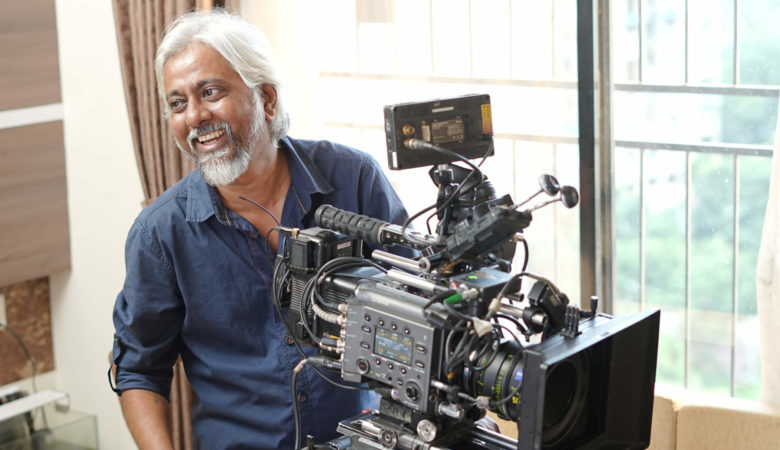
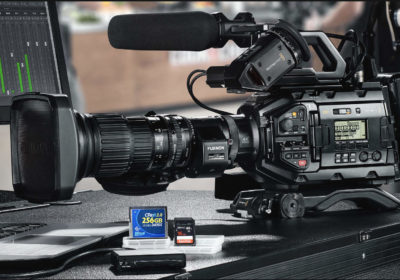
Elegant, sophisticated and jam packed with the latest digital cinema technology, Blackmagic Cinema Camera gives your work that timeless feature film look! Blackmagic Cinema Camera features an amazing 2.5K image sensor with a wide 13 stops of dynamic range for a true digital film camera. You get a built-in SSD recorder, popular open standard uncompressed RAW and compressed file formats, compatibility with quality EF and ZE mount lenses, LCD touchscreen monitoring plus metadata entry, all packed into an exciting hand held design!
MiC by Apogee is the most compact studio quality USB microphone available for iPad®, iPhone® and Mac. About the size of an iPhone, MiC makes it easy to capture your best take with incredible quality, anywhere your music takes you. Record any sound you can imagine, from vocals to vibraphones, acoustic to lap steel guitars, pianos to percussion and everything in between, and build a track right on your iPad with GarageBand. MiC is also the perfect companion to JAM, Apogee’s studio quality guitar input. Never before has the personal studio been so portable or so powerful. Join the recording revolution with MiC, JAM and GarageBand on iPad.
MiC is a premium digital converter featuring PureDIGITAL technology which delivers your voice or acoustic instruments true tone to your iPad, iPhone or Mac without compromise. You will notice the sonic difference between MiC and other similar products immediately.
Review by Vinoo
Language : English
Director : Asif Kapadia
Senna. He was the best driver who ever lived.
I would agree with that. The story of Senna and his short but illustrious career on and off the track is very well pieced-together in this brilliant Documentary. Besides some rare footage, it also features Nigel Mansell, Jean-Marie Balestre, Nelson Piquet, Jackie Stewart, Sid Watkins among others. The film delves on the politics of the sport and how in-spite of all odds Senna made it. Ayrton Senna glorified Alain Prost, and many others after, with worthy competition. One thing Senna, unlike Prost, never quite figured was the ‘politics’ of Formula One. The film documents Senna’s early life, his entry into Formula One with Toleman-Hart in 1984 with which he finished a close second to Prost at the Monaco Grand Prix, his superiority on rain-soaked tracks, his teaming up with Prost in 1988, winning the Grand prix in 1988, 1990 and 1991, Jean-Marie Balestre’s control of F1, Senna’s rivalry with Michael Schumacher, Senna’s stints with Tleman, Lotus, McLaren, Willians and ultimately his crash and death at the 1994 San Marino Grand Prix and much more. It has many interesting anecdotes like the time when Senna completed an couple of laps in the 6th gear after his gear box gave way during the Brazilian Grand prix in 1991 which he claimed to be the one race winning which gave him the utmost pleasure. A lot more trivia like how he would wave the Brazilian national flag after each race but ironically in the race of 1994, which would be his last, he had an Austrian flag rolled up in his car which he intended to raise in honour of Roland Ratzenberger, who died in a bad accident, after the race.
The introduction begins with : ‘If this is a book about Dutch football, at some stage you’ll probably wonder why it contains pages and pages about architects, church painters, rabbis and airports, but barely a word, for example, about PSV and Feyenoord. A very fair point. And the reason, I suppose, is that this is not so much a book about Dutch football as a book about the idea of Dutch football.’ Indeed. Brilliant read.
Quoting from the book again ‘Dutch people must be warm and fun and wonderful. They certainly all had to be very brave, living as they did below the sea and protected at times only by a small boy with his finger in a dike.’ Read the rest of this entry »
Review by Vinoo
Language : English
Director : Jeff Zimbalist, Michael Zimbalist
The two Escobars, Pablo and Andres : one a drug lord, the other a footballer who captained Colombia, both football maniacs. Jeff and Michael Zimbalist come together for the first time to tell the story of the two Escobars. During the era of Coccaine cartels in Colombia it seems ‘narcos and futbol were made for each other’. The film documents the lives of the two Escobars and their rise from extreme poverty to who they were. Football changed Colombia but then it was impossible to not attribute some of the success to drug money that poured in so brilliant footballers could be retained. The drug barons needed a way to convert all the drug money into legal currency, and the football team needed the money. There was not much choice.
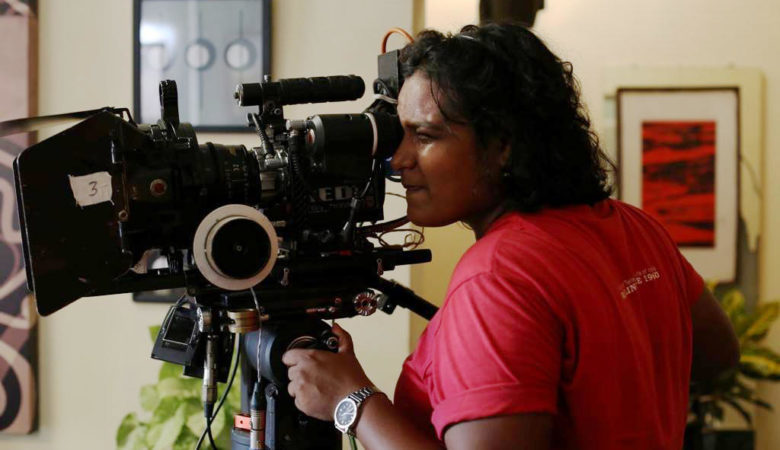
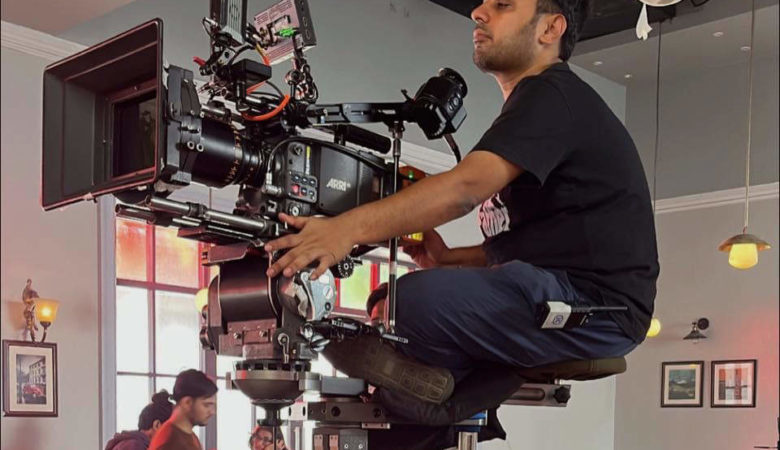
New Digital Cinematography camera which utilizes New 20 Megapixel Super 35mm CMOS imager, whose active image area is 24.7mm X 13.1mm. F65 camera has an integral PL mount which is standard for Film cameras. ARRI and Cooke Lens interface data and Metadata are recorded on SR Memory recorder.
F65 camera has base sensitivity of 800EI. In this mode you have 7 stops latitude over key and 7 stops under providing phenomenal Dynamic Range. F65 covers a wider color space over any other digital cameras. This allows more headroom for color grading and future proof camera original material.
The Rotary shutter has range of 11.5 degrees to 180 degrees. This eliminates CMOS motion artifacts. F65/RS also outputs shutter pulse for 3D /Motion Control rig application. With the rotary shutter you also have Built in ND Filters 0.3, 0.6, 0.9 and 1.2 Stops.
In the viewfinder and monitor output from the camera, X2 and X4 magnification can be enabled for critical focusing.
Ergonomics of the camera allows use of Film accessories such as ARRI, without any modification to the camera.
When camera is used in 16bit RAW File mode (Digital Negative), in POST one can render multiple resolutions such as:- 4K Cinema (4096 X 2160) 3840 X 2160 2K Cinema HDTV.
I am writing this letter amidst extreme hope that it will succeed in invoking a sense of interest in the reader about a research that I am involved in and their feedback would reciprocate the same. I am a senior lecturer of journalism and mass communication at IMS Dehradoon. I am trying to produce a research paper on comparative study of HD camcorders (low end professional e.g. Sony EX3) viz-a-viz video DSLRs (e.g. Cannon 5D MK 2) for the prestigious international journal of mass communication- PRAGYAN (ISSN No. 0974-5521).
Since you have pioneered this field and have substantial experience in using either or both the above mentioned gadgets, I humbly request you to take the following questioner to facilitate analysis of imperative data so that the inferences based upon the same can be drawn.
Please feel free and encouraged to give your suggestions. For information on IMS and PRAGYAN you can log on to www.ims.edu.in
Go on the next page to see the survey (click : Read More)
More than just a camera, the C300* and C300 PL* cameras mark the beginning of a whole new system for the motion picture industry. Form factor, ergonomics, image processing and lenses – re-imagined to tailor the experience of shooting to the needs of professional cinematography crews.
Large imager unleashes full creative potential. Modeled on the Super 35mm 3-perf motion picture film standard, Canon’s CMOS sensor has an active image size of 24.6 x 13.8mm. The image sensor utilizes an innovative readout technique that delivers full bandwidth individual RGB video components without the need for any
debayering algorithms.